Navigating a damaged client relationship
Address the issue head-on
🙏 Be honest
Don't obfuscate or appear to obfuscate. If we made a mistake, we need to own up to it. At the same time, make sure to call clients out (gently) on their bullshit when they throw undeserved blame your way. You made a mistake, but let's stay clear on what that mistake was exactly.
🏃♀️ Be responsive
These kinds of messages can be stressful to respond to, but the longer they sit the harder it will become to repair the situation. Ask somebody more experienced (or just less stressed) to help you collect all of the information you need.
📝 Plan it out
Start composing your message with bullet points and then fill out as needed. Make sure you address all of their questions and concerns clearly, separating your message into digestible sections so that they read the whole thing.
Clarify a denouement
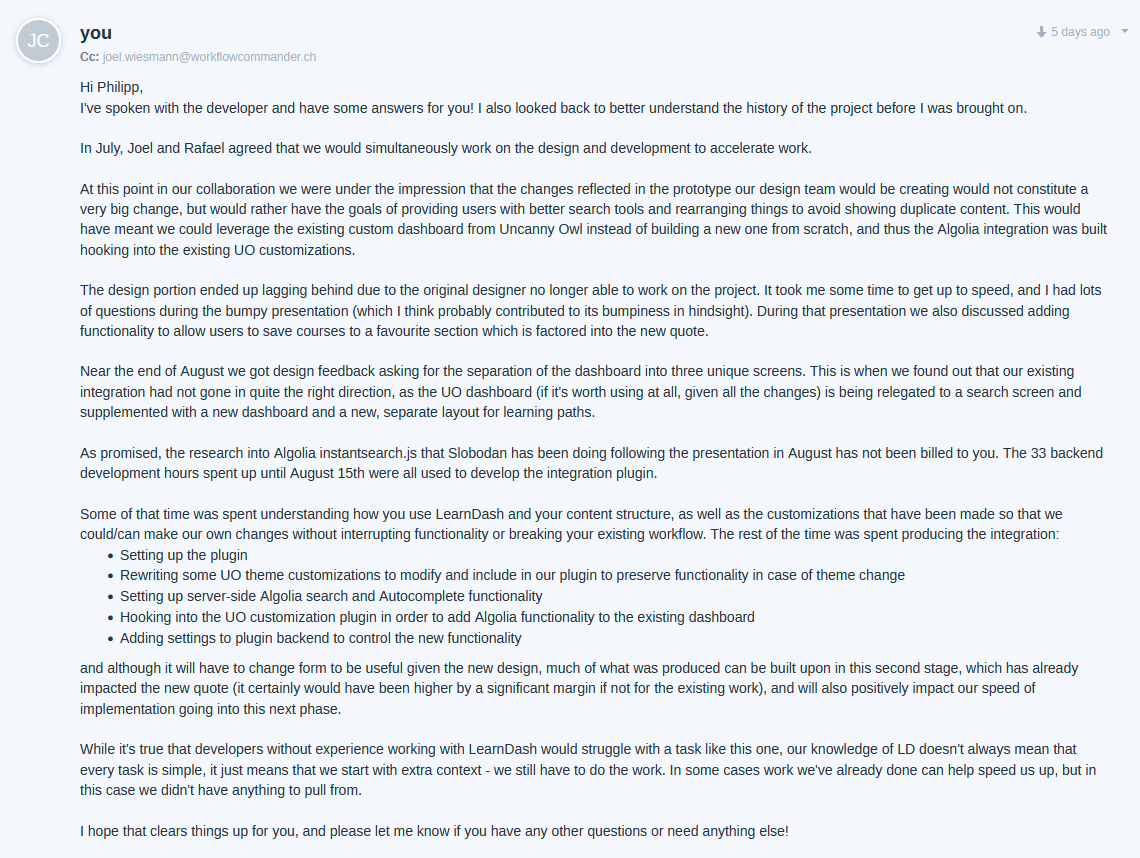
Make sure that you and the client are on the same page regarding the events that led to this situation. Often when a client is frustrated it's been caused by a breakdown in communication somewhere along the way, and getting on the same page about:
- the state of the project,
- what's been done,
- what choices have been made and why,
- what impact the client's choices have had on the project
is a good first step to helping them feel better about our work together.
Be willing to cooperate to find a solution, within reason. Don't make grand promises we can't deliver on, but work with the client to improve their experience of our collaboration.
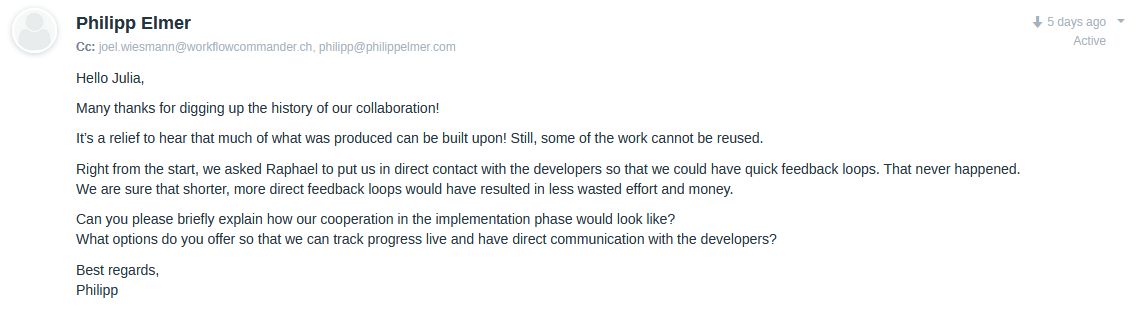
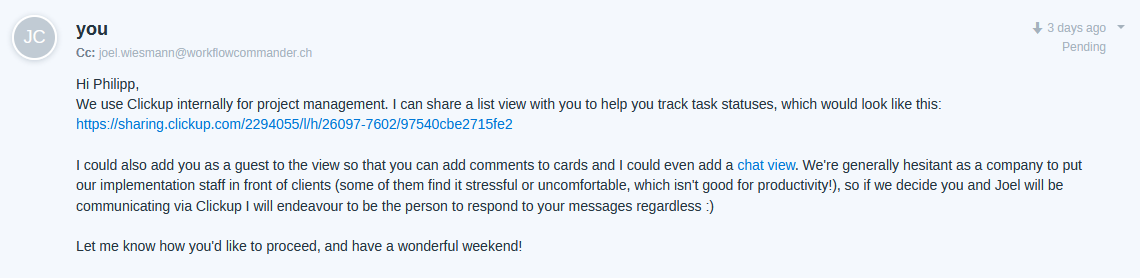
Enjoy the rapprochement
Most of the time a difficult situation will be immediately rectified by a 30-minute call. Go in prepared, explain everything clearly and be reassuring. Direct access to you makes clients feel secure. Bring someone more experienced along just in case things go sour.
Bask in the glow of those smiley faces:
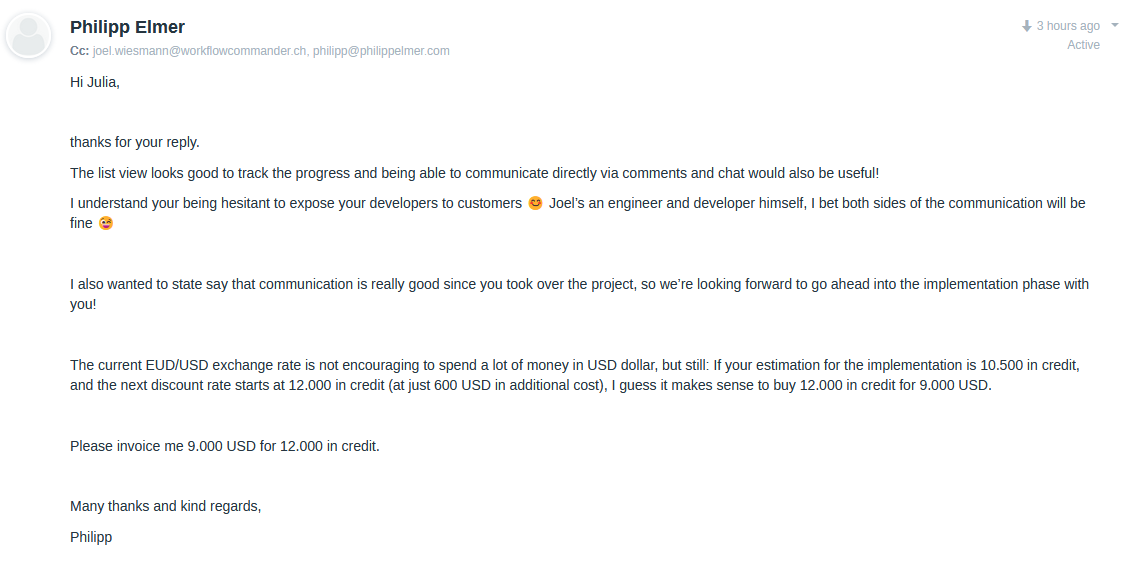
It might take awhile to straighten things out and in some cases you might not be able to get the relationship back on track, but once you do, congratulate yourself! This is the most stressful part of your job, and you handled it admirably 😊
The best solution is prevention
Ideally we don't ever end up in this situation, but sometimes things fall through the cracks and despite our best intentions sh!t happens. Regardless, it's less costly and less stressful to address small issues along the way instead of waiting for things to blow up.
Surprise is the enemy
When a client can't get answers, doesn't understand what's happening, or is unpleasantly surprised, their trust that we can deliver on our promises begins to flag. The most common cause of client stress involves money. Did we spend more than expected without telling them? Was our estimate way off and now we need to adjust? Is our delivery date dragging on and costing them money?
- ✅ Send utilization notes frequently so there are no unpleasant surprises for clients when their credit suddenly runs out. Most of our clients don't have giant sums of cash laying about and need a bit of notice before a new invoice comes through for extra credit.
- ✅ Communicate clearly when something is going wrong, and let clients know when their requests change the cost calculation or delivery schedule. If you don't have a good idea of the impact, let them know this "might" be the case, and then ask your implementation team for a quote. Let the client decide if their request is worth the cost before allowing work to start.
Your stress is also the enemy
Proactively addressing issues also means managing your own workload and stress well.
When you can't handle communication, pass it off to someone who can. Don't silently let a client sit unanswered for days or weeks. If you're sick or need a mental health break, make sure someone can take over for you so you don't come back to a more stressful situation.
You can also delegate or ask for help when you don't have enough time to juggle it all. Our team is only getting bigger, which means more people who can support you when you need it. Make sure that the person you ask for help is (at least somewhat) enthusiastic and won't be drowned in their own stress. Make sure they have all of the information and access they need to pick up where you left off, and if possible introduce them to the client as the person who will be assisting you in handling their account.